 blog
Best Books on Modern Grandparenting for 2026
Table of Contents
- Why the Best Books on Modern Grandparenting Look Different Now
- What Makes a Grandparenting Book Worth Your Time
- Modern Grandparenting Best Practices: What the Research Says
- How to Set Boundaries with Adult Children (Scripts Included)
- Grandparenting in Blended and Non-Traditional Families
- Digital Safety and Screen Time: What Books Often Miss
- Long-Distance Grandparenting: Staying Close Across the Miles
- What to Ignore: Common Bad Advice for Grandparents
- Frequently Asked Questions
Last Updated: September 30, 2026
Why the Best Books on Modern Grandparenting Look Different Now
The best books on modern grandparenting teach a role, not a rulebook. Twenty years ago, a grandparenting guide was mostly stories and sentiment. Today's parents are working from pediatric guidance, safety standards, and their own researched opinions, and they expect you to be on the same page. That shift is why this guide from The Grandparent Advantage focuses on scripts, boundaries, and screen-free time rather than nostalgia.
I'm Michael Cafarelli. I've watched a lot of grandparents buy a well-meaning book, read half of it, and still freeze at the kitchen table when their daughter says, "We don't do that with him."
The books worth your money now do three things well:
- They give you exact words to say, not just principles.
- They treat your adult child as the decision-maker, not the obstacle.
- They show you what to do with a grandchild for two hours without a tablet.
Below, I'll walk through what separates a useful grandparenting book from a shelf-filler, plus the topics most of them still skip.
What Makes a Grandparenting Book Worth Your Time
A grandparenting book is worth your time when it changes what you do on your next visit. That's the whole test. If you finish a chapter and can't name one thing you'll say or do differently, put it back.
Here's what I look for:
- Word-for-word scripts. Not "communicate openly." Actual sentences you can say out loud.
- A clear stance on who's in charge. The parents set the rules, including in your home.
- Screen-free activities that work with the toys and space you already have.
- A section on stepping back without stepping away.
Scripts You Can Actually Say Out Loud
Most guides tell you to "respect boundaries" and stop there. That's useless when you're standing in your own kitchen being told the juice rules have changed.
Useful books hand you lines like these:
- "You're the mom. Tell me the rules and I'll follow them at my house too."
- "I'd love to help with bedtime. What does that look like at your place?"
- "I'm not going to argue with you about this. I just want to get it right."
Short. Non-defensive. Easy to remember under pressure.
Activities That Do Not Involve a Screen
The strongest books include a bank of things to do that need nothing but attention. Cards, cooking, walking, reading aloud, building something in the garage.
The Grandparent Playbook ($12.97) came out of this exact gap: ten boundary scripts, forty screen-free games, and simple ways to help grandkids with reading, writing, and speaking. If you want one practical starting point, that's it.
Modern Grandparenting Best Practices: What the Research Says
Modern grandparenting best practices come down to consistency, warmth, and staying in your lane. The research on child development is fairly clear that kids do better with stable, caring adults beyond their parents, and that the quality of the relationship matters more than the quantity of hours.
But "be consistent and warm" is not a plan. Here is what it actually looks like in a week.
The Four Habits That Do the Work
- Show up predictably. Same day, same time, if you can. A standing Tuesday afternoon beats three surprise visits. Kids build trust on rhythm, not volume.
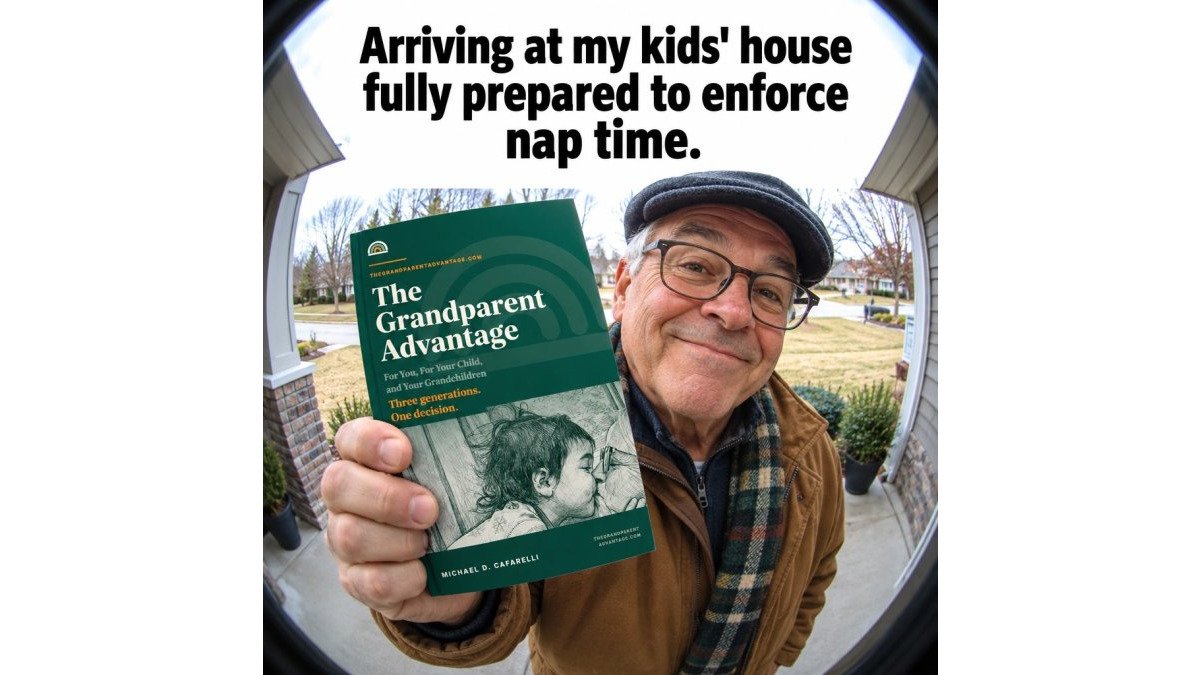
- Follow the parents' routines, even the ones you find fussy. If nap is at 12:30, nap is at 12:30. If the 3-year-old doesn't get juice after 4 p.m., she doesn't get juice at your house either. Routines are how small children feel safe, and you are borrowing theirs.
- Ask before you give, buy, or promise anything. This includes small things. A promised ice cream trip that the parents didn't know about creates a problem they have to solve later.
- Keep your opinions about parenting to yourself unless you're asked. That last one is the hard one. I know.
The One Question That Prevents Most Friction
Before you offer advice, ask: "Do you want my thoughts, or do you just want me to listen?"
That single question does two things. It puts your adult child in charge of the conversation, and it saves you from giving an opinion they didn't ask for. Most of the time they will say "just listen." Listen.
What "Staying in Your Lane" Actually Means
Staying in your lane does not mean staying quiet or staying away. It means knowing which decisions are yours and which are not.
Yours:
- What you serve at your table (within the parents' rules)
- How you spend your time together
- What you are willing to do and not do
- How you respond when you disagree
Theirs:
- Bedtimes, screen rules, food rules, discipline
- What the child wears, watches, reads, and plays
- Who else is in the child's life
- Big decisions about school, activities, and health
When you are unsure which column something falls in, it is theirs. Ask, then follow.
A Simple Weekly Check-In
One short text a week keeps you aligned without being intrusive:
"Anything different this week I should know about?"
Kids change fast. A rule from three months ago may already be gone. Asking this one question signals that you are paying attention and that you expect the rules to move.
What to Do When You Slip
You will slip. You will hand over the tablet without checking, or make a face when you hear a rule you think is silly. When it happens, name it fast:
"I caught myself doing that thing we talked about. I'll do better next time."
Short, no excuses, no re-litigating. Kids watch how adults repair, and your grandchild is watching you too.
How to Set Boundaries with Adult Children (Scripts Included)
Learning how to set boundaries with adult children starts with accepting that you're setting boundaries on yourself, not on them. You're deciding what you'll do, what you won't, and how you'll respond when you disagree. That's it.

Say these out loud before you need them:
- When you disagree with a rule: "That's your call. I'll do it your way at my house."
- When you're asked to do too much: "I can do Tuesdays. I can't do every day, and I don't want to let you down."
- When you've overstepped: "I was out of line. It won't happen again."
- When you want more time: "I'd love more time with them. What would actually help you?"
Notice none of these win an argument. That's the point.
The Handoff Plan: A Simple Way to Stay Aligned
A handoff plan is a short conversation, usually ten minutes, where you and the parents agree on the basics before you watch the kids. It prevents almost every conflict I've seen.
Cover four things:
- Nap and bedtimes
- Food rules and allergies
- Screen rules
- What to do if something goes wrong
Write it down. Text it to yourself. Then follow it even when you think it's unnecessary.
Grandparenting in Blended and Non-Traditional Families
Blended families need grandparents who follow the household's lead, not the family tree. If your son's stepdaughter calls you Grandpa, you're Grandpa. If a grandchild has two sets of grandparents on one side, you're one of several, and that's fine.
A few ground rules that hold up:
- Use the names the parents use. Don't correct a child about who's "really" family.
- Don't play favorites between biological and step-grandchildren. Kids notice immediately.
- Ask before you bring up a parent who isn't in the picture.
- Keep gifts and time roughly even, especially in front of the kids.
If a custody arrangement is involved, that's a legal matter. Talk to a professional, not a grandparenting book.
Digital Safety and Screen Time: What Books Often Miss
Most grandparenting books barely mention screens, which is strange given how much of a grandchild's day involves them. This is one of the areas where you can be genuinely useful, because you're often the adult with the most unstructured time.
What to do:
- Ask the parents for their screen rules and enforce them exactly, even if they seem strict.
- Keep your own phone down when the grandkids are with you. They copy what they see.
- Never hand over a device with an app you haven't checked.
- Know what to do if a child sees something upsetting: stay calm, tell the parents, don't hide it.
For guidance on media and children, the American Academy of Pediatrics media use recommendations are a solid, plain-language starting point.
Long-Distance Grandparenting: Staying Close Across the Miles
Long-distance grandparenting works when you build a routine instead of waiting for a visit. Kids bond with the adults who show up regularly, even from far away. The trick is that "showing up" from a distance almost always involves a screen, and that is exactly where most grandparenting books go quiet.
So here is the part they skip: how to stay close across the miles without stepping on the parents' screen rules.
Start With the Parents, Not the Grandchild
Before you set up a weekly video call, ask the parents two questions:
- "What screen rules should I follow on our calls?"
- "Is there a time of day that works best for you?"
Some parents limit total screen time and will want your call to count against it. Some will not care. You will not know unless you ask. Getting this wrong is the fastest way to have a standing call quietly cancelled.
The Routine That Actually Sticks
Pick one anchor and hold it. Not three. One.
- A short video call at the same time each week. Ten minutes beats an hour once a month. Kids remember the rhythm, not the length.
- A recorded bedtime story sent on a schedule. Same night each week. The parent plays it; you are not on the call. This works especially well for toddlers and preschoolers.
- A shared project with a visible finish line. A photo album, a garden, a model, a countdown to the next visit. Something the child can point to and say "Grandpa and I are doing that."
- Letters or postcards. Kids love getting mail with their name on it. A postcard a month is enough.
What to Do on the Call
Aimless "how was school" calls fizzle by age six. Give the call a job:
- Read one book together, with the child turning pages on their end.
- Do a show-and-tell. They show you a toy; you show them something from your day.
- Play a guessing game. Twenty questions, I-spy, or "what am I holding."
- Cook the same simple thing at the same time. Pancakes work.
End the call before the child gets bored. A short call they want more of beats a long call they dread.
When the Parents Are Separated
If your grandchild splits time between two households, keep your routine the same in both. Do not compare the households out loud, and do not let one parent feel like you are closer to the other. Your job is to be the steady adult, not the messenger.
When a Visit Finally Happens
The first hour of an in-person visit can feel awkward if all your grandchild knows is your face on a screen. Plan the first activity before you arrive. Bring one thing you have been sharing on calls, the same book, the same recipe, the same puzzle, so the connection carries over.
What to Ignore: Common Bad Advice for Grandparents
Some of the most repeated grandparenting advice is actively harmful. Here's what to skip.
- "You raised your kids, so you know better." You raised your kids in a different era with different safety standards. That doesn't make you wrong, but it doesn't make you the authority either.
- "Just do it your way at your house." Your house, their rules. This is the fastest way to lose time with your grandchildren.
- "They'll come around." They might not, and waiting passively rarely helps. Ask what would help.
- "Buy their love." Big gifts create awkwardness and set a pattern you can't sustain on a fixed income.
- "Keep your opinions to yourself forever." You can offer an opinion once, if asked, and then let it go.
Frequently Asked Questions
What are the best books for new grandparents?
Look for books that combine practical scripts with activities you can use right away. The best ones cover how to set boundaries with adult children, offer screen-free games, and explain modern safety guidance without lecturing. A book that gives you exact words to say when your daughter disagrees with you is worth more than one that just celebrates grandparenthood. The Grandparent Playbook is a good example because it focuses on what to say and do, not just theory.
How do I set healthy boundaries with my adult children without causing conflict?
Start by asking, not telling. A script like 'I want to help the way you want me to help. What does that look like for you?' opens the door without pressure. When you disagree, say 'I hear you. You're the parent, and I'll follow your lead.' Keep the focus on supporting their decisions, not relitigating them. Books on modern grandparenting that include word-for-word scripts make this easier because you are not improvising in a tense moment.
What does it mean to be a modern grandparent?
Being a modern grandparent means respecting that your adult child sets the rules, even in your own home. It means staying current on safety guidance, offering help without overstepping, and building connection through consistent, intentional time together. It also means knowing how to support your grandchildren's development without becoming a second parent. The role has shifted from authority figure to supportive mentor, and the best modern grandparenting books reflect that shift.
Are there resources for grandparents who want to stay connected from far away?
Yes. Long-distance grandparenting works best with a predictable rhythm: a weekly video call, a shared book you read at the same time, or letters that arrive by mail. Books that cover long-distance connection often include ideas for low-cost rewards and simple rituals that build closeness across miles. The key is consistency, not grand gestures. A short call every Sunday beats a long visit twice a year for building a real relationship.