
 blog
blog
Best Grandparenting Courses for Beginners: 2026 Guide
Table of Contents
- What Makes a Grandparenting Course Worth Your Time
- Best Grandparenting Courses for Beginners: What to Compare
- How to Set Boundaries With Adult Children (Scripts Included)
- Tips for New Grandparents: Start Here
- Safe Sleep, Car Seats, and CPR: Safety Updates Since You Raised Kids
- Long-Distance Grandparenting: Making It Work When You Live Far Apart
- Digital Safety and Privacy: What Beginners Need to Know
- What a Beginner Course Should Cost (and What to Skip)
- Frequently Asked Questions
Last Updated: September 21, 2026
What Makes a Grandparenting Course Worth Your Time
The best grandparenting courses for beginners teach two things well: how to keep a grandchild safe, and how to build a warm relationship without stepping on your adult child's toes. Most courses lean one way or the other. You want one that does both.
I'm Michael Cafarelli, and I built The Grandparent Advantage after watching too many grandparents guess their way through this role. Here's the first thing to know: the rules have changed a lot since you raised kids.
A grandparenting course is a structured program that updates you on current safety guidance and gives you practical ways to connect with your grandchildren. It is not a replacement for the parents' judgment. It supports it.
Below, I'll show you exactly what to compare, what to skip, and the scripts that make the hard moments easier.
Safety Content vs. Relationship Content: Know Which One You Need
Safety content covers sleep, car seats, choking, and CPR. Relationship content covers bonding, boundaries, and communication.
If you'll babysit a newborn, safety comes first. If your grandkids are older, relationship skills matter more. Most beginners need a mix of both.
Look for a course that states clearly which topics it covers before you sign up. Vague descriptions usually mean vague content.
Five Questions to Ask Before You Sign Up
Ask these before you pay for anything:
- Does it cover safe sleep and car seat updates from the last five years?
- Does it give me actual words to say, or just general advice?
- Can I use it at my own pace?
- Is there a refund if it isn't a fit?
- Does it respect that the parents set the rules?
If a course can't answer those, keep looking.
Best Grandparenting Courses for Beginners: What to Compare
Most beginner courses fall into one of three buckets. Knowing which bucket you need is the whole decision.
- Safety-first courses. Built around safe sleep, car seats, choking, and CPR. Usually short, often free, and often hosted by a hospital or a safety organization. Best if a newborn or infant is about to be in your care.
- Relationship-first courses. Built around bonding, boundaries, and communication with your adult child. Best if your grandkids are past the baby stage, or if the tension in your family is about roles, not safety.
- Both-in-one courses. Safety updates plus scripts and connection tools. Rarer, and usually the best fit for a true beginner because you don't know yet which problem you'll hit first.
If you're not sure which bucket you're in, ask yourself one question: what keeps me up at night? If it's "I don't remember how babies are supposed to sleep," go safety-first. If it's "I don't know how to help without annoying my daughter," go relationship-first. If it's both, find a both-in-one course.
A Simple Side-by-Side
| What to Check | Safety-First Course | Relationship-First Course | Both-in-One Course |
|---|---|---|---|
| Safe sleep and car seat updates | Yes | Usually no | Yes |
| Infant CPR pointer | Yes | Rarely | Yes |
| Word-for-word scripts | Rarely | Yes | Yes |
| Screen-free games and activities | No | Sometimes | Yes |
| Handoff plan for returning the grandchild | No | Sometimes | Yes |
| Self-paced format | Usually | Usually | Usually |
| Refund policy | Varies | Varies | Look for one |
Where My Course Fits
The Grandparent Advantage is a both-in-one course. It pairs current safety guidance with word-for-word scripts and screen-free games, so you're covered whether the next hard moment is a car seat or a conversation.
You have two ways in:
- The Grandparent Playbook, $12.97. Ten word-for-word boundary scripts, 40 screen-free games, help with reading, writing, and speaking, the handoff plan, and low-cost ways to reward grandkids. This is the right starting point if you want the scripts and games without the video walkthrough.
- The Complete Course, $99.97. Everything in the Playbook plus six video modules. This is the right starting point if you want someone walking you through it step by step.
Both come with a 30-day refund, so you can try either one and change your mind.
How to Test a Course Before You Pay
You can usually tell in ten minutes whether a course is worth your money. Do this:
- Read the course outline. If it doesn't list safe sleep, car seats, and communication as separate topics, it's incomplete.
- Look for a sample script. If the course shows you one real sentence you could say to your adult child, it probably has more.
- Check the refund window. A course that won't let you change your mind is a course that isn't confident in itself.
- Search the course name plus "review." If you can't find a single honest review, be cautious.
- Ask the course creator one question by email. If they answer clearly and quickly, that tells you something about the material inside.
For current safety guidance, always cross-check with the CDC's child safety and injury prevention pages. No course should replace that.
Format: Video, Workbook, or Both?
Video works well if you like watching someone explain things. Workbooks work better if you like writing notes and going back to them.
The best beginner courses give you both. Video for the walkthrough, a workbook for the reference.
Ask yourself one question: will I actually finish this? Pick the format you'll stick with.
Red Flags That Signal a Weak Course
Watch for these:
- No mention of safe sleep or car seats
- Promises to "fix" your relationship with your grandchild
- Advice that tells you to override the parents
- No refund policy
- No clear list of what's included
Any one of these is a reason to walk away.
How to Set Boundaries With Adult Children (Scripts Included)
Boundaries are not rejection. They are the fence that keeps the relationship safe. This is the part of grandparenting courses that beginners value most, because it turns a tense moment into a simple sentence.
Here are scripts you can say out loud. Change the words to fit your family.
- When you disagree with a rule: "I'll follow your lead on this. Tell me what you'd like me to do."
- When you want more time with the grandkids: "I'd love to see them more. What works with your schedule?"
- When you're asked to babysit last minute: "I can help tonight. Let me check one thing first and call you back."
- When you've overstepped: "I'm sorry. I'll do it your way next time."
- When you're unsure about a decision: "What would you like me to do here?"
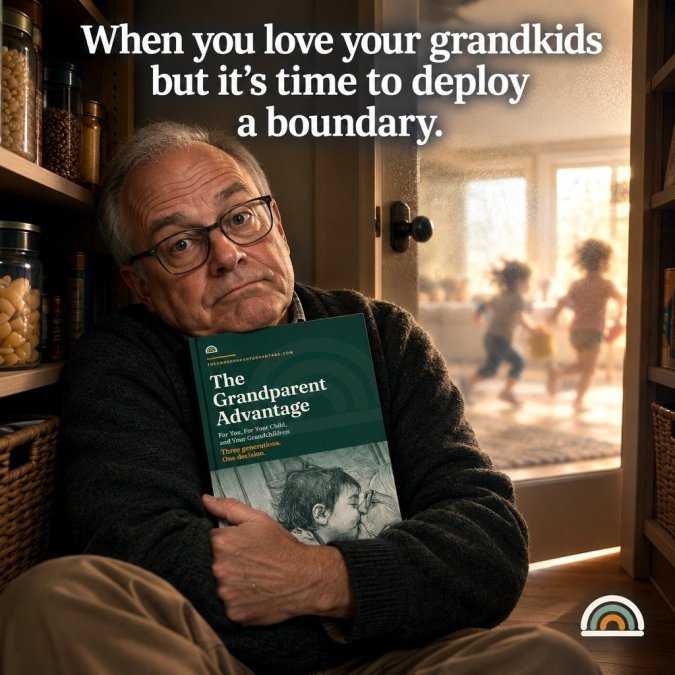
The parents set the rules, including in your home. Say that out loud to yourself before every visit. It changes how you show up.
If you want ten more of these scripts already written out, The Grandparent Playbook has them ready to use. You can find it here: The Grandparent Playbook.
Tips for New Grandparents: Start Here
Start with the parents, not the baby. Ask what they need. Then do that.
New grandparents often jump straight to advice. Resist that. Your job in the first year is support, not instruction.
Try these:
- Ask before you visit, every time
- Offer specific help: "Can I bring dinner Thursday?"
- Learn the parents' rules and repeat them back
- Keep your opinions about parenting to yourself unless asked
- Take photos, but ask before posting
The Handoff: When the Parents Come Back
The handoff is the moment you return the grandchild to the parents. It's where small problems turn into big ones.
Keep it simple. Give a short report. Then step back.
Say: "She ate at five, went down at six-thirty, and woke up happy. Anything you want to change for next time?"
No commentary. No comparisons. Just the facts and an open door.
Safe Sleep, Car Seats, and CPR: Safety Updates Since You Raised Kids
A lot has changed since you raised kids. Here are the four updates that matter most, in plain language.
1. Back to Sleep
Babies sleep on their backs, on a firm surface, with nothing else in the crib. No bumpers, no blankets, no toys, no pillows. This has been the standard guidance for decades, and it's the single biggest change from what many grandparents remember.
Follow the AAP safe sleep recommendations rather than what you remember. The guidance changed for good reasons.
A common pattern I hear from grandparents: "But he sleeps better on his stomach." That may be true in the moment, but the parents' job is to follow current guidance, and your job is to follow their lead. If you're unsure, ask the pediatrician, not the internet.
2. Car Seats
Kids stay rear-facing longer than they used to. The old "one year and twenty pounds" rule is gone. Current guidance keeps children rear-facing until they outgrow the rear-facing limits of their specific seat, which is often well past age two.
Check the seat's manual and the NHTSA car seat guidance for the current rules. Every seat is different, and the manual that came with the seat is the final word.
Two things grandparents often get wrong:
- Tightening the harness over a bulky winter coat. Take the coat off first, then buckle.
- Moving the seat between cars without checking the install. A seat that's installed correctly in one car may not be in another.
If you're going to be driving your grandchild, ask the parents to show you the install once. It takes five minutes and prevents the most common mistake.
3. Infant CPR
Take a hands-on class. A course can point you to one, but you need to practice on a mannequin. Watching a video is not the same as doing compressions on a mannequin while someone corrects your hand placement.
Look for infant CPR certification through the American Red Cross or your local hospital. Many hospitals run short infant CPR sessions specifically for grandparents and caregivers.
A reasonable rule of thumb: refresh your certification every two years. If it's been longer than that, or if you've never taken one, sign up before your next solo babysitting stint.
4. Choking and Feeding
Feeding rules have shifted too. No honey before age one. No cow's milk as the main drink before age one. No whole grapes, whole nuts, or chunks of hard raw vegetables for young children, because they're choking hazards.
Cut grapes lengthwise into quarters. Cut hot dogs lengthwise into strips, not coins. Sit children upright while they eat, and don't let them eat while running or lying down.
Quick Safety Checklist
- Baby sleeps on their back, alone, in a crib
- Crib is empty of blankets, bumpers, and toys
- Car seat is installed and rear-facing per the manual
- Harness is snug, no bulky coat underneath
- Infant CPR class completed in the last two years
- No honey or cow's milk before age one
- Grapes quartered, hot dogs cut into strips
- Outlets covered, stairs gated, medicines locked up
What to Do When You're Not Sure
The safest move when you don't know the current rule is to ask. Call the parents. Call the pediatrician's office. Look it up on a .gov or .org site. Guessing based on what you did thirty years ago is how small mistakes turn into big ones.
If you want a single place to keep the parents' rules, the handoff plan in The Grandparent Playbook walks you through writing them down so you're not relying on memory in the moment.
Long-Distance Grandparenting: Making It Work When You Live Far Apart
Distance does not weaken the bond. Consistency does the work. A short call every week beats one long visit a year.
Try this:
- Pick a fixed time each week for a video call
- Read the same book together over several calls
- Send a letter or drawing by mail
- Ask the parents for photos you can talk about
- Plan one visit and count down to it together
Kids remember rhythm more than grand gestures. Show up the same way, again and again.
Digital Safety and Privacy: What Beginners Need to Know
Ask before you post. That's the whole rule. Parents decide what images of their children go online.
Some parents keep their kids off social media entirely. Respect that, even if you disagree. A photo you share can't be taken back.
Also watch what you click. Scam messages often pretend to be from family. If a "grandchild" asks for money by text, call the parents first.
For plain guidance on protecting kids online, the FTC's advice on protecting your child's privacy is a good starting point.
What a Beginner Course Should Cost (and What to Skip)
You should not have to spend a lot to learn this. Start with free resources, then pay only for the structure and scripts you'll actually use.
The Grandparent Plan is a free download at thegrandparentadvantage.com/plan. It gives you the framework before you spend anything.
Skip anything that charges by the month with no clear end. Skip anything that promises to repair a broken relationship. No course can promise that.
Here's how to compare your options:
| What to Look For | Why It Matters | Skip If Missing |
|---|---|---|
| Current safety guidance | Rules changed since you raised kids | No safe sleep or car seat content |
| Word-for-word scripts | You need words in the moment | Only general advice |
| Self-paced format | Fits your schedule | Rigid live-only sessions |
| Refund policy | Low risk to try | No refund offered |
| Respect for parents' rules | Protects the relationship | Tells you to override them |
The Complete Course at thegrandparentadvantage.com/course is $67.97, includes all materials plus six video modules, and everything comes with a 30-day refund.
Frequently Asked Questions
What are the benefits of taking a grandparenting course?
A good course gives you words to say and steps to follow, so you are not guessing in the moment. You learn current safety guidance, like sleep and car seat rules that have changed since your own kids were small. You also get practice with boundaries, which lowers tension with your adult children. Most grandparents say the biggest gain is confidence: knowing when to help and when to step back. A short course can also connect you with other grandparents facing the same questions.
Are there online resources for new grandparents?
Yes. Online grandparenting courses range from short video modules to downloadable playbooks you can print. Look for three things: current safety information, scripts you can say out loud, and a refund window so you can try it without risk. Some programs also include screen-free games and reading activities you can use on your next visit. If you prefer learning by doing, pick a course with checklists and scripts rather than hours of lecture. Start with a free plan if one is offered.
How do I support my adult children without overstepping?
Ask before you act. A simple script works: "I would love to help. What would actually be useful right now?" Then do that thing, not the thing you would have chosen. When you disagree with a parenting choice, save it unless a child is unsafe, and then talk with the parent privately, not in front of the kids. The parents set the rules, including in your home. That stance keeps you close to your grandchildren and makes life easier for your adult children.
What are healthy boundaries for grandparents?
Healthy boundaries are clear, kind, and consistent. Common ones include calling before visiting, following the parents' rules on food, screens, and bedtime, and asking permission before posting photos online. Another is agreeing on how often you babysit, so it is a plan rather than an assumption. When you need to say no, keep it short: "I can't do Thursday, but I can do Saturday morning." Boundaries protect the relationship instead of testing it, and they work best when you state them once and then follow through.
Grandparenting well takes more than love. It takes updated safety knowledge, a few good scripts, and the discipline to let the parents lead. The Grandparent Advantage gives you all three: a research-backed plan, word-for-word boundary scripts, and screen-free games that build real connection. Start with the free Grandparent Plan, or get the full system with The Complete Course and its six video modules. Visit thegrandparentadvantage.com to begin.