
 ultimate-guide
Modern Parenting Tips for New Grandparents
Table of Contents
- What Modern Parenting Looks Like (And Why It Matters)
- Modern Baby Safety Guidelines for Grandparents
- How to Set Boundaries With Adult Children
- Grandparenting Scripts for Difficult Conversations
- What to Keep at Your House for a New Baby
- Communication Strategies With New Parents
- Digital Privacy and Social Media Boundaries
- Offering Support Without Overstepping
- Screen-Free Bonding and Child Development
- Navigating Multi-Generational Household Dynamics
- Financial Boundaries and Gift-Giving Etiquette
- Your Role as a Grandparent Today
- Frequently Asked Questions
Last Updated: September 19, 2026
What Modern Parenting Looks Like (And Why It Matters)
Modern parenting has shifted in ways that matter to you as a grandparent. The safety guidelines have changed. The rules about screen time are different. The way parents talk to their kids about emotions, boundaries, and decision-making is not what you grew up with.
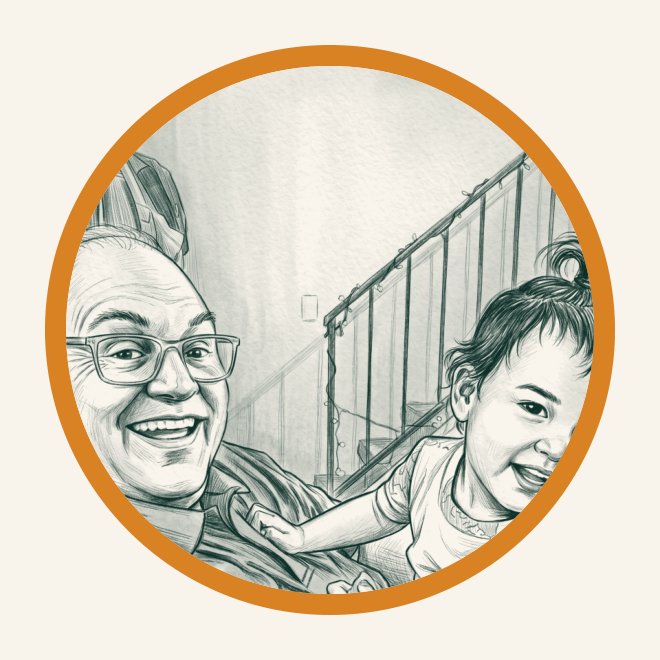
This doesn't mean your instincts were wrong. It means the landscape has moved, and if you want to stay close to your grandchildren and support your adult children, you need to understand what's actually happening in their homes.
I work with grandparents every day who feel caught between the way they raised their kids and the way their kids are raising theirs. The gap feels real because it is. But here's what I've learned: the gap closes when you understand the why behind modern parenting tips for new grandparents, not just the rules.
Your role as a grandparent is not to enforce the old way or to override the new one. It's to be the person who gets it, who respects the parents' choices, and who shows up in a way that makes their job easier, not harder.
Let's start with safety, because that's where most of the visible changes are.
Modern Baby Safety Guidelines for Grandparents
Modern baby safety guidelines exist because research has changed what we know about risk. Some of these changes will feel overcautious to you. Some will feel right. What matters is that your adult children have made these choices for their own children, and your job is to honor that in your home.
Safe Sleep Practices
The safe sleep standard has one core rule: babies sleep on their backs, on a firm surface, in a crib or bassinet with no pillows, blankets, bumpers, or soft objects.
This is different from how many of us put our babies down. We used bumpers to prevent injuries. We added blankets for warmth. We propped babies on their sides. Research now shows that these practices increase the risk of Sudden Infant Death Syndrome (SIDS).
Here's what you need to know for your home:
- Baby sleeps on their back, every time
- Crib or bassinet only (not a couch, bed, or play yard for sleeping)
- Firm mattress with a fitted sheet, nothing else
- Room-sharing without bed-sharing (baby in your room, in their own sleep space, for at least six months, ideally a year)
- Consider a pacifier at nap time and bedtime (after breastfeeding is established if the baby is breastfed)
- Keep the room at a comfortable temperature; overheating increases risk
- Avoid sleep positioners, wedges, or anything that claims to reduce SIDS risk
If you're caring for a newborn overnight, ask the parents to show you exactly how they set up the sleep space. Don't assume. Write it down if you need to. This is not a moment to rely on memory or what felt right thirty years ago.

Car Seat Safety Updates
Car seat safety rules have tightened, and they vary by your child's age, weight, and height, not just age alone.
The general progression is:
- Rear-facing car seat: From birth until the child reaches the maximum weight or height for the seat (usually 40-50 pounds and 3-4 years old, depending on the model)
- Forward-facing car seat with a harness: Once the child outgrows the rear-facing seat, until they reach the maximum weight or height (usually 65-100 pounds and 8-10 years old)
- Booster seat: Once the child outgrows the forward-facing seat, until they're tall enough for the vehicle's seat belt to fit properly (usually 8-12 years old, 57-63 inches tall)
- Seat belt only: When the child can sit upright against the vehicle seat with knees bent at 90 degrees and the seat belt fits across the chest and lap correctly
The car seat must be installed correctly. Many parents use a professional installation service. If you're regularly transporting your grandchildren, ask the parents to show you how to install the seat in your vehicle, or offer to take them to a certified technician. A loose car seat is not a car seat.
Never move a car seat between vehicles multiple times a day. If your grandchild is with you regularly, keep a properly installed seat in your car.
How to Set Boundaries With Adult Children
This is where the real work happens, and where most grandparents feel the most uncertainty.
Your adult children are the parents now. They set the rules for their children. This is not a power grab or a rejection of you, it's how healthy families work. Your job is not to agree with every choice. Your job is to respect that it is their choice to make.
This is hard. You have experience. You have opinions. You probably did some things really well, and you want to pass that forward. But the moment you override a parent's decision in your home or behind their back, you create a problem that's bigger than whatever issue you were trying to solve.
The boundary is: in their home, their rules. In your home, you follow their rules too, unless they've explicitly said otherwise.
The 'Yes, And' Approach
The 'Yes, And' approach is a framework for supporting your adult children without surrendering your own judgment.
It works like this: you acknowledge what they're doing ('Yes'), and then you add your support or perspective ('And').
Here's what it sounds like in practice:
Scenario: Your daughter-in-law is sleep-training the baby, and you think she's being too rigid.
Instead of: "You're being too hard on that baby.
Respecting Parenting Decisions You Don't Agree With
You will not agree with every parenting decision your adult children make. That's normal. The question is: what do you do with that disagreement?
Grandparenting Scripts for Difficult Conversations
The scripts below are word-for-word phrases you can use when the conversation gets uncomfortable. Read them a few times so they feel natural to you. The goal is not to memorize them perfectly, it's to have a framework so you're not scrambling for words when emotions are high.
When you're tempted to give unsolicited advice:
When you disagree with a parenting choice:
When the grandchild asks you to break a rule:
When your adult child is frustrated or overwhelmed:
When you've made a mistake:
What to Keep at Your House for a New Baby
If your grandchild is going to spend time at your place, you need certain things on hand. This is not about having a second nursery, it's about being prepared so the handoff is smooth and the parents feel confident leaving their child with you.
For a newborn or infant (0-12 months):
- A safe sleep space (crib, bassinet, or pack-and-play with a firm mattress and fitted sheet)
- Diapers in the sizes the baby currently wears (ask the parents what brand and size)
- Wipes
- Diaper rash cream
- A few outfits in the current size and the next size up
- A blanket or sleep sack for warmth (nothing in the crib)
- Bottles and formula if the baby is formula-fed, or bottles for expressed milk if breastfeeding
- Bottle sterilizer or a clean pot for boiling
- Burp cloths
- A safe place to change diapers (changing table, dresser with a pad, or even a towel on the bed)
For a toddler (1-3 years):
- A safe sleep space (toddler bed, crib, or pack-and-play)
- Diapers and pull-ups if still in diapers
- Wipes
- A few outfits
- Shoes if you have outdoor space
- Snacks the parents have approved (ask what's okay)
- A step stool for the bathroom sink
- Childproofing: outlet covers, cabinet locks, baby gates if needed
- A few toys or books (you don't need many, the child will be entertained by your house)
For a preschooler (3-5 years):
- A bed or sleeping space they can manage on their own
- A step stool for the bathroom
- A few activities: coloring supplies, blocks, books, puzzles
- Snacks
- A toothbrush and toothpaste
- Childproofing if you have hazards
Communication Strategies With New Parents
The relationship with your adult children shifts when they become parents. They're more tired. They're more protective. They're more likely to be defensive about their choices. Understanding this helps you navigate the relationship without taking things personally.
Listen more than you talk.
Ask before you offer help.
Specific offers are easier to accept.
Acknowledge how hard it is.
Follow their lead on big decisions.
Be reliable.
Digital Privacy and Social Media Boundaries
This is a modern issue that didn't exist when you were raising your children, and it's one of the biggest sources of tension between grandparents and new parents today.
Common rules you might hear:
- "No photos online at all"
- "Photos are okay, but please don't tag me or use [child's] name"
- "Only in our private family group, not on your public timeline"
- "Ask me before you post anything"
- "No photos of [child] alone, only with family"
- "No photos in certain situations" (like at school, in a bathing suit, sleeping, etc.)
- "No location information or details about our routine"
What to do if you slip up.
How to talk to your grandchild about digital privacy.
The grandparent's advantage in a digital world.
That's a gift.
Offering Support Without Overstepping
Support means making the parents' lives easier, not inserting yourself into their decisions.
Good support:
- Bringing a meal so they don't have to cook
- Offering to watch the older kids while they focus on the newborn
- Doing laundry or dishes when you visit
- Asking what they need and then doing that specific thing
- Celebrating their parenting choices, even the ones you wouldn't make
- Being available without being intrusive
Overstepping:
- Rearranging their house to do things "the right way"
- Correcting their parenting in front of the child
- Making decisions about the child without asking
- Showing up unannounced
- Giving advice they didn't ask for
- Criticizing their choices to other family members
- Using guilt or obligation to get access to the grandchild
Screen-Free Bonding and Child Development
Screen time is a real issue in modern parenting, and it's one where grandparents can offer something genuinely valuable: sustained attention and real play.
Why screen-free time matters for development.
The challenge: when grandchildren are used to screens.
How to transition to screen-free time.
Then, when the grandchild asks, you have a framework:
- Acknowledge what they want. "I know you want to watch a show. That's something you like."
- Remind them of the rule. "When you're at my house, we do other things instead."
- Offer a real alternative. "We can build something with blocks, or play a game, or go outside. What sounds good?"
What screen-free time actually looks like.
- Playing a simple board game. Even if the child is too young to understand the rules, you're teaching turn-taking, patience, and how to handle winning and losing. Games like Candy Land, Chutes and Ladders, or even a homemade game with cards work fine.
- Building with blocks or Lego. No instructions needed. The child builds, you build, you build together. You're teaching spatial reasoning and problem-solving.
- Drawing or coloring together. You don't have to be good at art. You're teaching that it's okay to make something imperfect, and that the process matters more than the product.
- Playing outside. Digging, climbing, running, exploring, collecting rocks or leaves. This is where children burn energy and practice physical skills.
- Cooking or baking together. Even a young child can help mix, pour (with help), or decorate. You're teaching following steps, measuring, and cause-and-effect.
- Reading books. Sit together, read, pause to talk about the pictures. Let the child turn the pages. Ask questions. Let them ask questions.
- Playing pretend. House, store, restaurant, doctor, school. You don't need props. You can use what's in your kitchen or living room. The child leads, you follow.
- Doing a puzzle together. Start with puzzles that match the child's age. A two-year-old might do a 4-piece puzzle. A five-year-old might do a 24-piece puzzle.
- Playing with toys. Dolls, cars, action figures, stuffed animals. You don't need many. The child will create a whole world with a few toys and your attention.
- Gardening together. Digging in dirt, planting seeds, watering plants. Even if nothing grows, the child is learning about nature and doing something with you.
- Walking and talking. A walk around the neighborhood, to a park, or just around your yard. The child notices things, asks questions, and you're moving together.
The real benefit.
That's what they'll remember.
Navigating Multi-Generational Household Dynamics
If you're living in a multi-generational household with your adult children and grandchildren, the boundary issues become more complex because you're sharing physical space.
This means:
- You follow the parents' bedtime, not your own schedule
- You follow their food rules, even if you disagree
- You ask permission before giving the child something, even in your own kitchen
- You don't make decisions about the child's day without checking with the parent first
- You support the parent's discipline, even if you would handle it differently
This does NOT mean:
- You have no say in what happens in your own home
- You have to tolerate disrespect or dangerous behavior
- You can't set basic household rules (shoes off, no running inside, etc.)
- You have no boundaries around your own belongings or time
Financial Boundaries and Gift-Giving Etiquette
Money and gifts can create tension between generations if boundaries aren't clear.
Before you buy a gift, ask:
Avoid:
- Giving gifts the parents have specifically said no to (certain toys, screens, sugar, etc.)
- Giving money with strings attached ("This is for her college, but you can use it if you need to")
- Giving something expensive without asking first
- Giving gifts to one grandchild and not others
- Giving gifts that undermine the parents' values or rules
Your Role as a Grandparent Today
Your role is not to be a second parent. It's not to fix the things you think your adult children are doing wrong. It's not to be the "fun grandparent" who breaks all the rules.
Frequently Asked Questions
Q: How do I know if I'm overstepping?
Q: How much should I spend on gifts?
Frequently Asked Questions
What are the most important safety rules for new grandparents to know?
The biggest changes from when you were raising kids involve sleep safety and car seats. Babies should sleep on their backs on a firm surface with no pillows or bumpers. Car seats have new installation standards and weight limits that change frequently, ask your child's pediatrician for current requirements. Also ask about vaccination schedules and any allergies or food restrictions. Modern parents track these carefully, and staying aligned keeps your grandchild safe and your relationship with your child stronger.
How can grandparents respect modern parenting boundaries?
Start by asking before you suggest anything. Instead of 'You should try this,' try 'I noticed you're handling the sleep issue, what's working best for you?' This shows respect for their authority. Remember: your role is to support their parenting decisions, not to override them, even in your own home. When you disagree, ask questions first. Often you'll understand their reasoning, and even when you don't, your adult child will appreciate that you tried to understand before judging.
What should grandparents have at their house for a new baby?
Ask your child what they prefer rather than guessing. Most modern parents want you to have basics: a safe crib or pack-and-play that meets current safety standards, car seat (if the child visits alone), diapers in the right size, and age-appropriate toys. Ask about feeding supplies, formula, bottles, or breastfeeding setup, and any comfort items the baby needs. Having these ready shows you've thought about their needs, and it removes friction when they visit.
How do I offer help to new parents without overstepping?
Ask specifically what would help most, rather than offering general support. 'Can I bring dinner on Thursday?' is better than 'Let me know if you need anything.' New parents are often sleep-deprived and won't ask for help, so concrete offers work better. If they say no, accept it without pushing back. Your job is to make their life easier, not to prove your usefulness. When you respect their 'no,' they're more likely to say yes next time.
What's the difference between being involved and overstepping?
Involved means supporting the parents' decisions and being reliable. Overstepping means making decisions for the child without the parents' agreement or ignoring their stated preferences. If your child says 'No screen time before age 3,' that's their rule in their home and yours. If they want you to enforce a bedtime, do it. The clearer your child is about expectations, the easier your job becomes, and the safer and happier everyone is.
How often should I see my grandchildren if I live far away?
That depends entirely on what works for your child's family. Some grandparents see grandchildren monthly, others quarterly. Quality matters more than frequency. When you do visit, be fully present, put the phone away, play, listen, and show genuine interest in their lives. Regular video calls between visits help maintain connection. Ask your child what schedule works best for them and their children, then stick to it reliably. Consistency builds attachment.
What should I do if I disagree with how my child is parenting?
Unless the child's safety is genuinely at risk, keep your opinion to yourself. Modern parenting looks different from how you raised your kids, different doesn't mean wrong. If you're concerned about something specific, ask your child about it privately and listen to their reasoning. If they're following guidance from their pediatrician or a parenting expert, that's their choice to make. Your role is to be a steady, supportive presence, not a critic.
How do I talk about social media and photos of my grandchildren?
Ask your child directly: 'Are you okay with me posting photos of the kids on social media?' Some parents want no photos shared online at all; others are fine with it. Respect whatever they say without negotiating. If they say no, don't post. If you've already shared photos and they ask you to take them down, do it immediately. Digital privacy is a real concern for modern parents, and honoring their wishes builds trust.
For more guidance on setting boundaries, having difficult conversations, and building a stronger relationship with your grandchildren, visit thegrandparentadvantage.com. We offer free resources, including The Grandparent Plan, to help you navigate this season of your life with confidence and intention.